
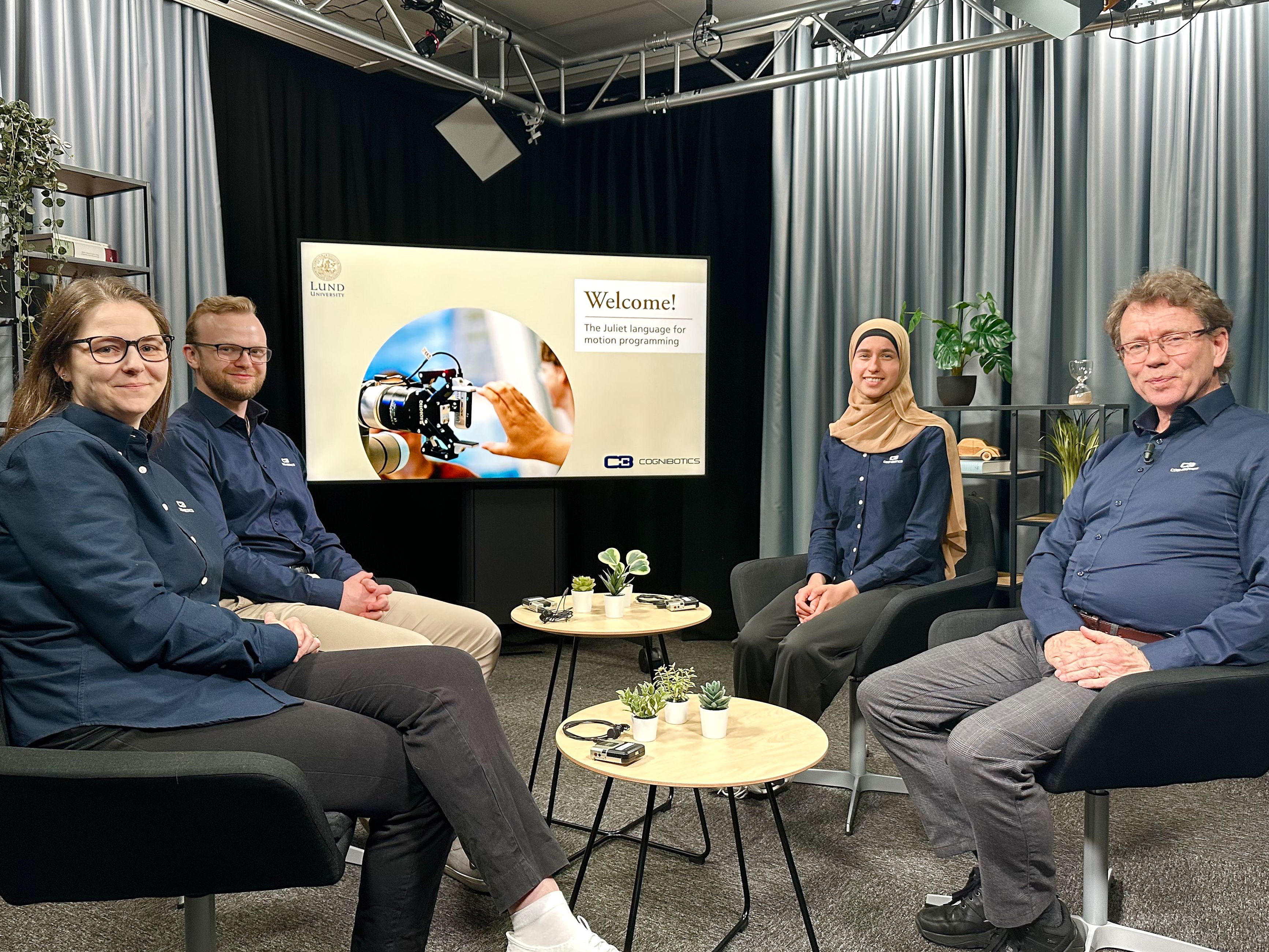
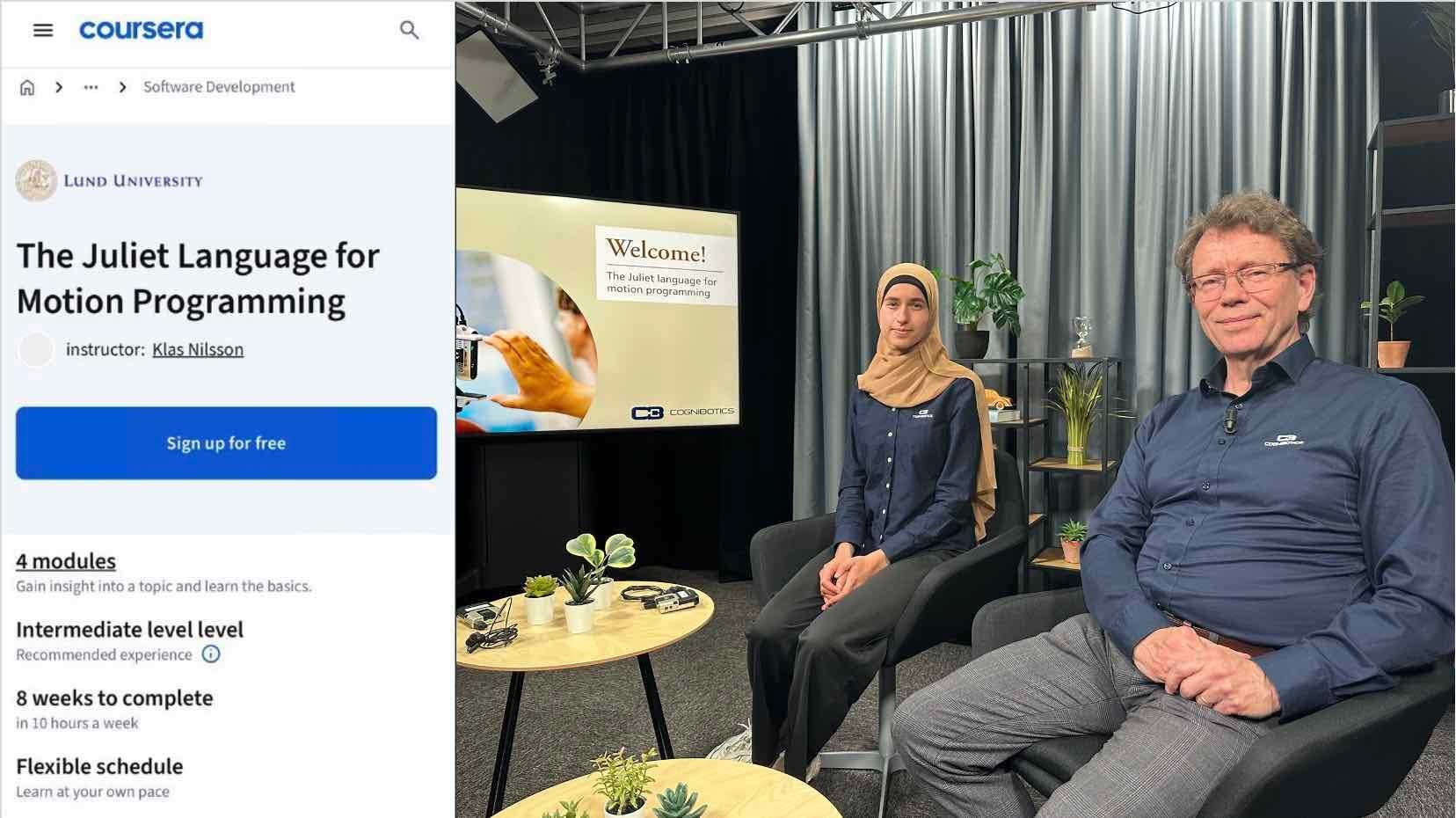
Lund, Sweden — Dec 30, 2025. In a world increasingly shaped by automation and robotics, the need for clear, reliable and accessible knowledge in the field is growing. Lund University, together with Cognibotics, has launched “The Juliet Language for Motion Programming” as a community impact course on Coursera – making it freely available to anyone with a computer and a Coursera account.
As robotics takes on a larger role in society, the demand for people with in-depth knowledge of motion programming is increasing just as rapidly. Yet for learners such as students, hobbyists, and independent developers, the current robotics ecosystems present three major obstacles. First, many of the robot programming languages used today were built decades ago, which makes it difficult to apply modern software and workflows. Second, each major industry player has their own solution, often non-modular and incompatible with others. And third, many tools are proprietary, meaning that there is usually a paywall to learn and use those languages.
Because of this, many newcomers to robotics turn to modern and free-to-use software instead. However, they often struggle because they lack the proper understanding needed to program motion safely, interactively, and in a way that reflects real industrial requirements.
“Today, working with robots often demands a rare mix of control theory, software engineering, and domain expertise,” said Fredrik Malmgren, CEO, Cognibotics. “In demanding warehouse applications, where Juliet & Romeo is already in use, partners describe it as ‘plug and play’ compared to traditional systems. This course helps close the skills gap by making industrial-grade motion programming accessible to the many more students and engineers - it’s a concrete step toward democratizing robotics.”
Juliet is a brand new robot programming language developed by Cognibotics together with Estun Automation. Inspired syntactically by its sister language Julia, Juliet combines the expressive power of modern programming languages with decades of proven industrial expertise in safe and interactive motion control. Behind Juliet stands Romeo, the real-time runtime that executes Juliet code and fulfills industry requirements on robot programming in terms of robustness, predictability, and user interaction. Together, Juliet & Romeo provide a proper foundation for teaching and practicing motion programming in a way that aligns with both industrial demands and contemporary software workflows.
The Juliet Language for Motion Programming provides insight into robot programming from a theoretical and practical perspective and explains how important aspects of programming robots are reflected in Juliet & Romeo. The teachers of the course, Amina Gojak, Sandra Collin, Philip Olhager and Klas Nilsson bring a unique combination of expertise: technical knowledge of Juliet & Romeo, extensive software experience in Julia and motion programming, hands-on experience with world-leading robot programming languages, and decades of academic insight into what it truly takes to program robot motion in an effective, safe and optimal way.
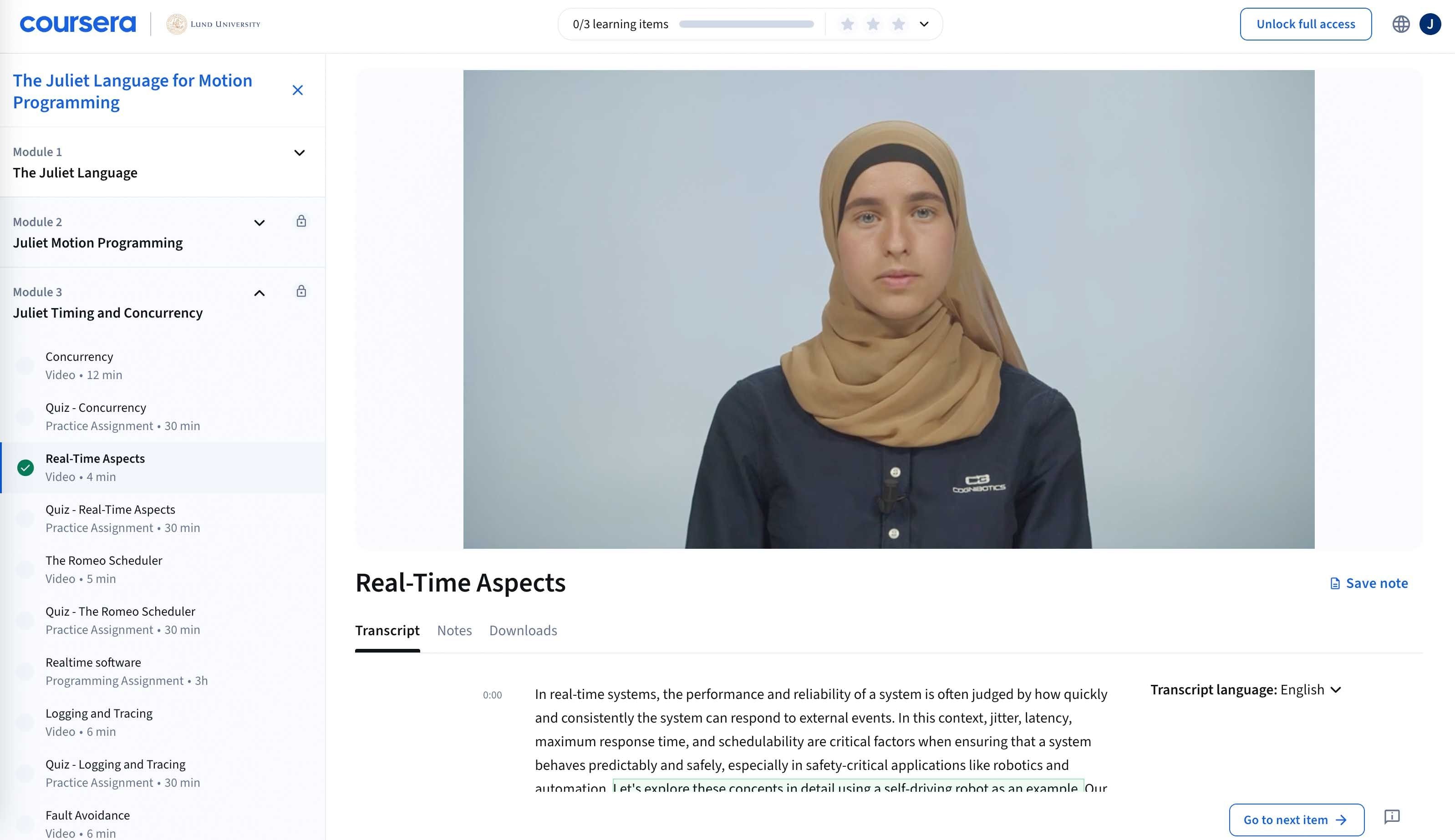
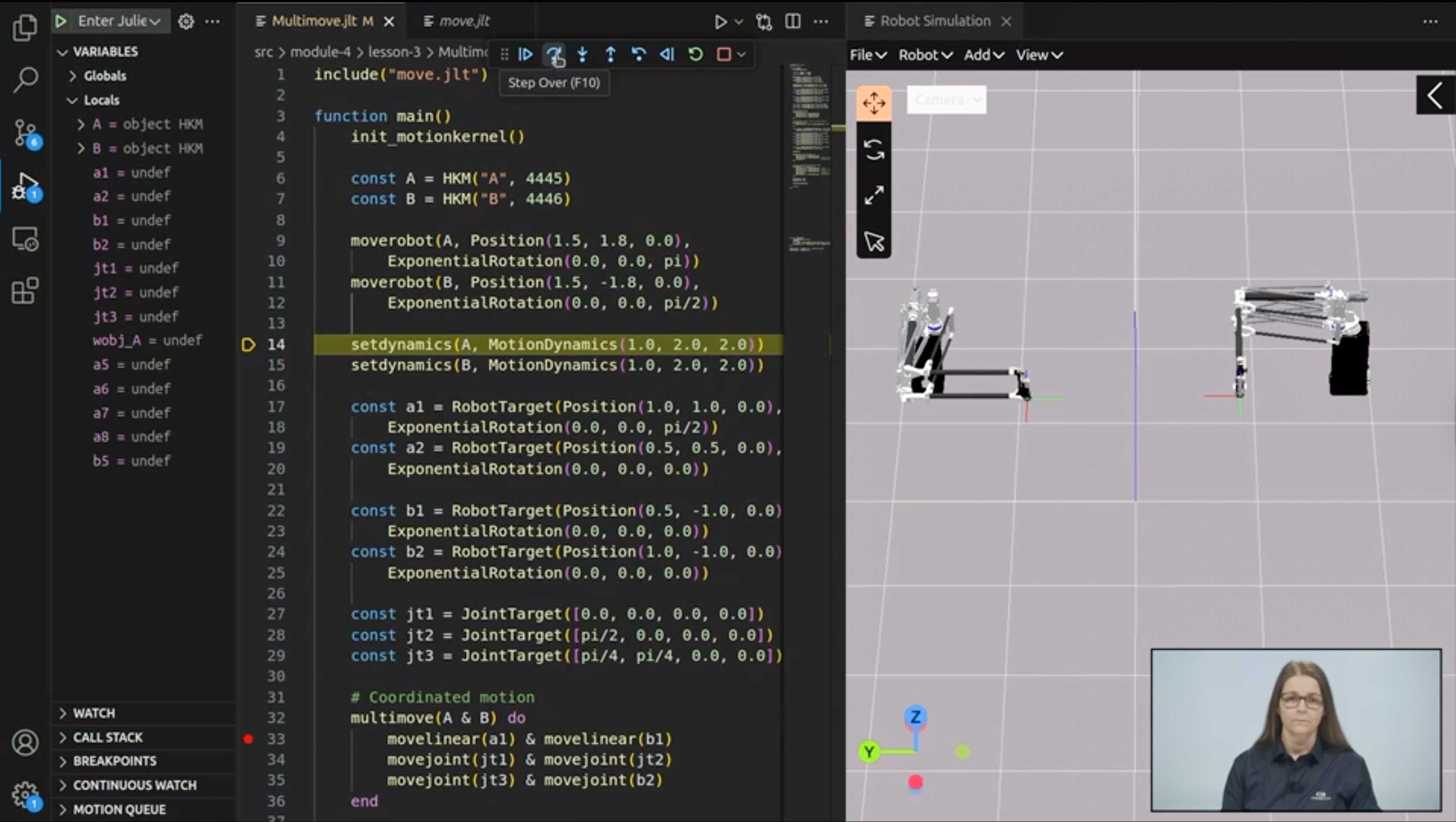
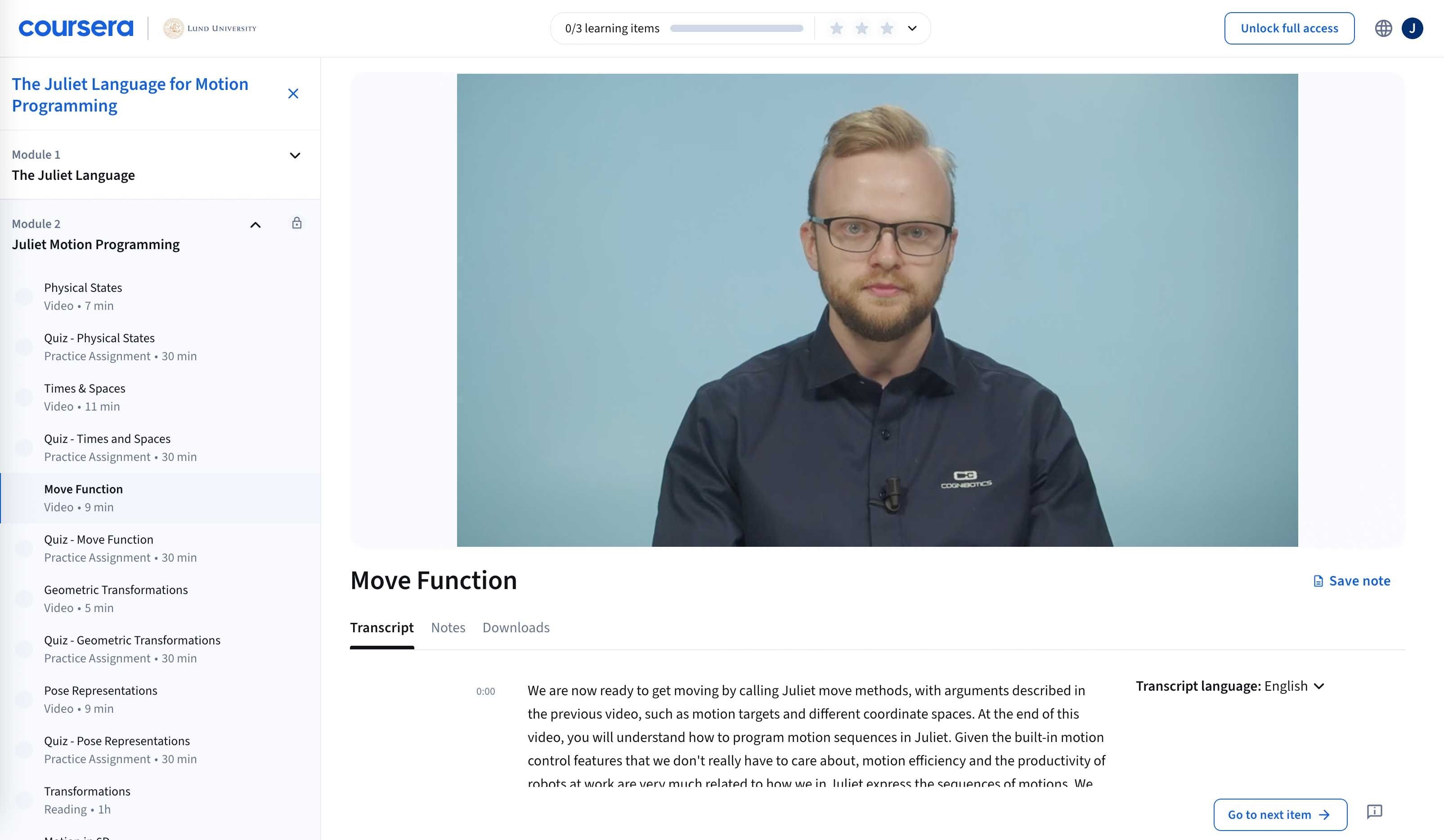
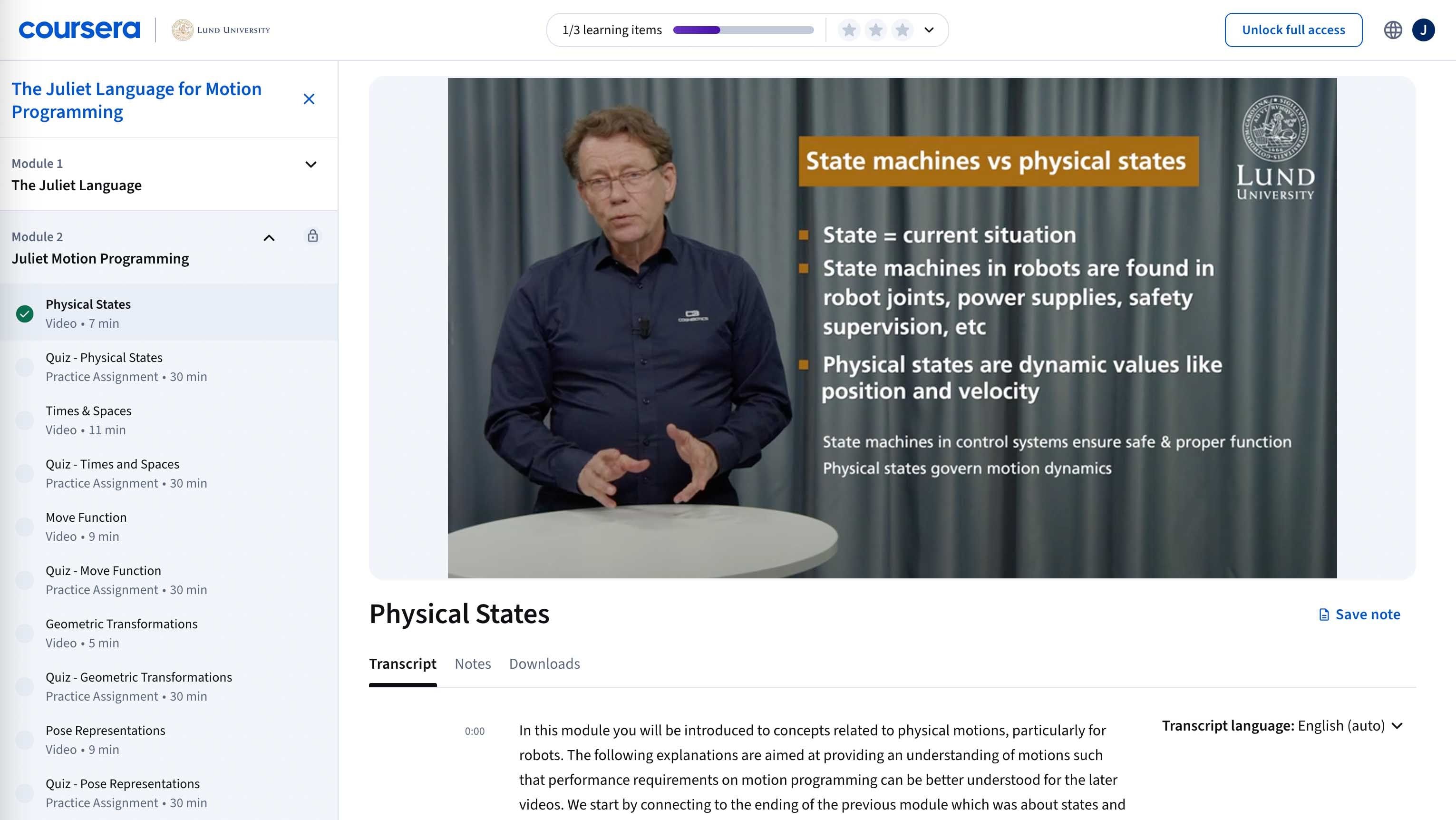
“For the university, it’s important that students don’t just learn robotics in theory, but also see how modern tools are used in real industrial systems,” said Klas Nilsson, Founder and CTO, Cognibotics, and Senior Lecturer in Robotics and Semantic Systems, Lund University. “This course lets learners anywhere in the world explore motion programming through a language and runtime that reflect today’s robotics challenges.”
As a next step, The Juliet Language for Motion Programming is focusing on extending its course by another module with an AI focus. The AI module will teach how to utilize Juliet & Romeo for Physical AI applications.
The course is freely available and open to anyone interested in understanding how modern robot programming works – whether they are just beginning their journey in robotics or seeking to deepen their expertise.
Link to the course: The Juliet Language for Motion Programming
Lund University, founded in 1666, is one of Northern Europe’s oldest and largest comprehensive research universities. With a strong international profile, Lund University is consistently ranked among the world’s top universities and is known for high-quality education, cutting-edge research, and extensive collaboration with industry and society.
For more information, visit: lu.se
Cognibotics is a Swedish motion-technology company pioneering intelligent automation that enhances productivity, sustainability, and human work quality. Its modular tech stack closes the gaps between existing industrial technologies while also providing new high-performance motion control, novel arm kinematics, a dynamic real-time software platform, intuitive motion programming, and emerging motion intelligence. Together, these technologies enable partners and customers to build smarter and more flexible automation systems.